Journal · 11 October 2026
Looking after stone and ceramic at home
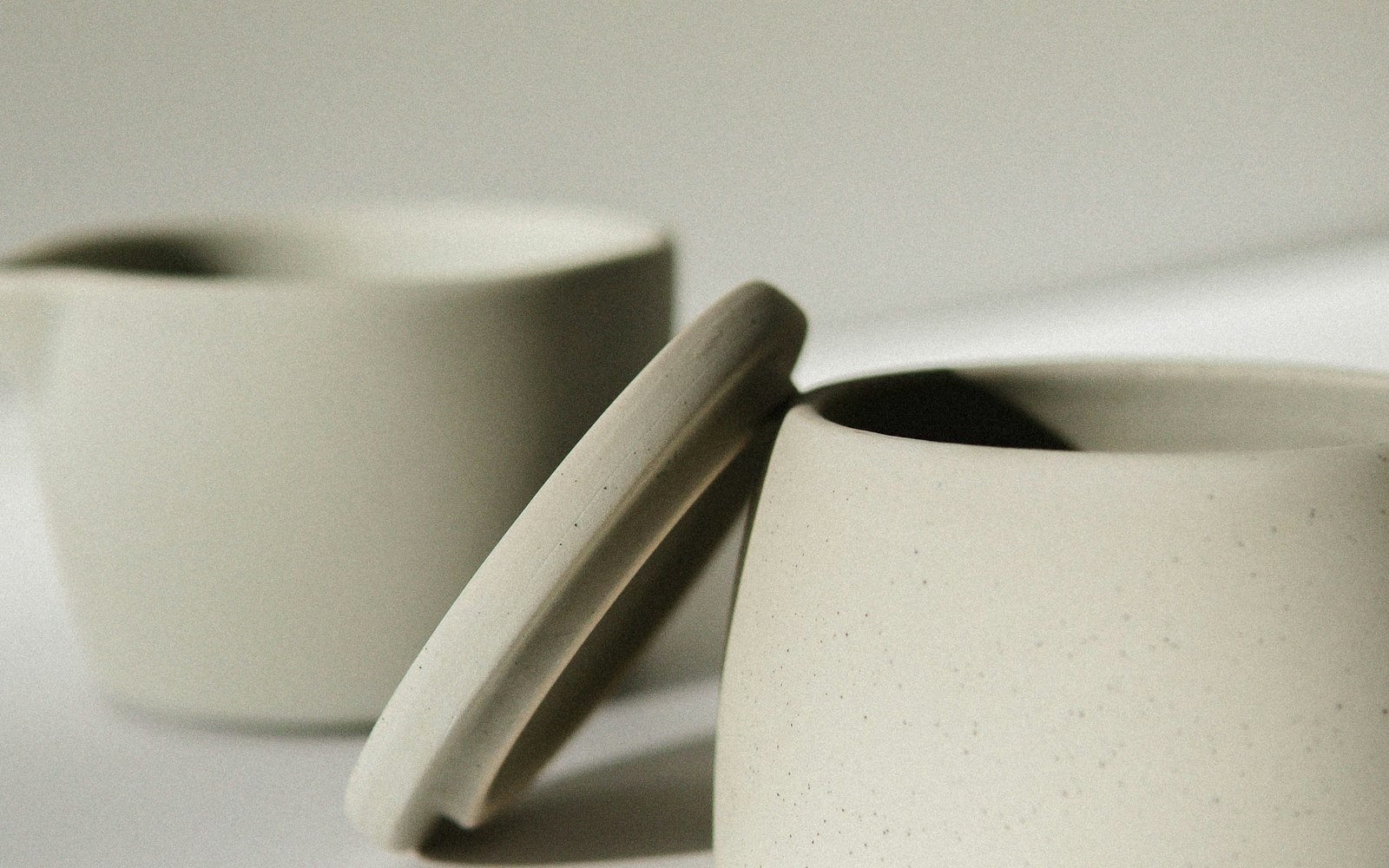
Marble, travertine and unglazed ceramic are easy to live with once you know what marks them. Most damage comes from two things: acid and standing water.
Marble and travertine
Both are forms of calcium carbonate, which reacts with acid. Lemon juice, vinegar, wine, tomato and many bathroom cleaners will etch the surface, leaving a dull patch that is a change in the stone itself rather than a stain.
- Wipe spills straight away with a soft damp cloth.
- Clean with warm water and a drop of pH-neutral washing-up liquid, then dry.
- Avoid vinegar, lemon, bleach and anything described as a limescale remover.
- Use a coaster or mat under glasses, bottles and plant pots.
Travertine has natural pits and voids. Some pieces are sold filled and some unfilled; neither is a fault. Dust collects in open pits, and a soft dry brush is the easiest way to lift it.
Sealing
A stone sealer slows down staining by filling the pores; it does not prevent etching. If a piece will sit near food, drinks or cosmetics, sealing it once a year is worthwhile. Always follow the instructions on the sealer you buy, and test it on the underside first.
Glazed ceramic
A glazed surface is glass, so it shrugs off most things. Wash by hand in warm soapy water. Avoid sudden changes of temperature, which can craze a glaze, and check whether a piece is described as watertight before you use it as a vase.
Unglazed and matte ceramic
Unglazed clay is porous. It will absorb oil from fingers and water from a wet base, and both leave marks. Handle it with clean dry hands, dust it with a dry cloth, and if you want to use an unglazed vessel for fresh flowers, stand a smaller glass inside to hold the water.
Protecting the furniture underneath
Stone and ceramic bases can scratch wood and lacquer. Small felt pads on the underside cost almost nothing and solve the problem permanently.